
‘Healthy’ Foods Won’t Make You Lose Weight, Here’s Why
‘Healthy’ food does not always mean weight loss. Your body responds to calories, portions, and habits, not labels. Many people run into this exact problem, and it has clear reasons once you look closer.
A food can be full of nutrients and still pack a lot of calories. That is where things go wrong. Granola is a great example. It sounds wholesome, but it often contains sugar and oils. A small bowl can quietly hit 300 to 400 calories before you add anything else.
Smoothies create the same issue. They look clean and fresh, but they can stack calories fast. A large smoothie with fruit, yogurt, and nut butter can reach 600 calories or more. That is closer to a full meal than a snack, yet it does not always feel filling.
Other foods carry the same trap. Flavored yogurt often hides added sugar. Protein bars can taste like dessert for a reason. They often contain chocolate coatings and syrups. They may have protein, but they still deliver a lot of calories.
Even natural foods can work against you. Dried fruit shrinks in size, but its sugar becomes concentrated. You can eat a lot without noticing. Nut butters are healthy, but two tablespoons already sit around 200 calories. Most people scoop more without thinking.
The problem is not that these foods are ‘bad.’ The problem is how easy it is to overeat them. When calories creep up, weight loss slows down or stops.
Portion Size Still Matters More Than You Think
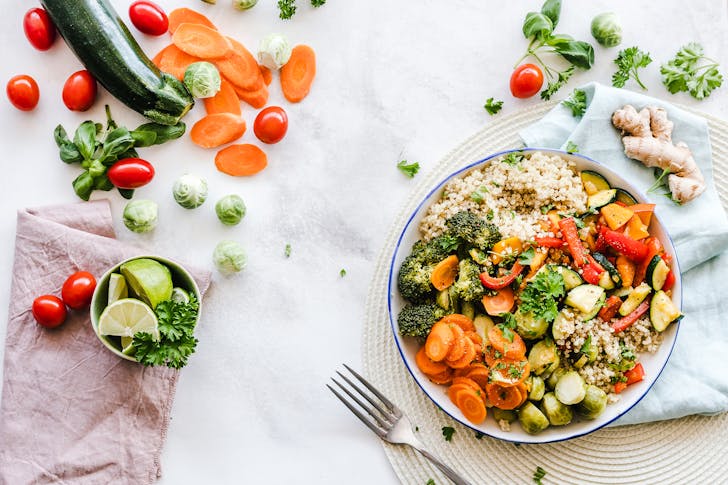
Ella / Pexels / Healthy eating often focuses on food quality, but quantity matters just as much. You can eat only whole foods and still gain weight if portions run too large.
Your body does not care if calories come from junk food or organic almonds. It tracks energy intake. If you eat more than you burn, your weight will not drop. This is why portion control plays such a big role.
A simple way to manage this is by building balanced meals. Fill half your plate with vegetables. Use a quarter for protein like chicken, fish, or beans. Use the last quarter for grains or starchy foods. This keeps portions in check without strict counting.
Weight loss is not only about food choices. Your body also adapts over time. When you eat less, your body becomes more efficient. It starts using fewer calories to do the same tasks.
This is called ‘metabolic adaptation.’ It can lower the number of calories you burn at rest. That means the same diet that worked before may stop working later. This can feel like hitting a wall.
Hormones also play a role. Hunger signals can increase when you lose weight. Your body tries to protect itself from further loss. This can lead to stronger cravings and more frequent hunger.
On top of that, strict dieting can backfire. When you follow rigid rules, it becomes hard to stick with them. One slip can turn into overeating because of guilt or frustration. That cycle can stall progress even more.
What Actually Helps You Lose Weight Then?
Ketut / Pexels / The goal is not to stop eating healthy foods. It is to use them in a way that supports your body. That means focusing on foods that give you more volume for fewer calories.
Vegetables are a strong example. You can eat a large portion for very few calories. This helps you feel full without overeating. Fruits also work well when you keep portions reasonable.
Lean protein is another key piece. Foods like fish, chicken, and low-fat dairy help control hunger. They keep you satisfied longer than high sugar snacks. This makes it easier to avoid overeating later.
Whole grains can stay in your diet, but portions should be controlled. A small serving of rice or oats works well when paired with protein and vegetables. Balance keeps meals filling without pushing calories too high.
More in Body
-
`
 The Pros and Cons of Drinking Stacked Water Everyone Should Know
‘Stacked’ water is having a moment. Scroll through social media, and you will see bottles filled with colorful layers, powders, seeds,...
April 23, 2026 -
`
 How Eating the Same Food Every Day Can Help With Weight Loss
Most people think variety is the key to a healthy diet. More colors, more choices, more excitement on the plate. That...
April 17, 2026 -
`
 Watch Tony Hawk’s Epic Solo Skate Session at Brooklyn Banks
Decades in, Tony Hawk still embodies the soul of skateboarding. The “Birdman” was spotted back at the historic Brooklyn Banks for...
October 31, 2025 -
`
 Ed Sheeran Opens Up About His Dramatic Weight Loss
Ed Sheeran didn’t just wake up fit in 2025. The 34-year-old English singer made it happen, one hard choice at a...
October 19, 2025 -
`
 New Research Shows You Can Cut Your Alzheimer’s Risk in Half With Lifestyle Changes
Lifestyle isn’t just about feeling good or staying fit. It is now one of the most powerful tools we have to...
October 5, 2025 -
`
 Is ‘Nature’s Ozempic’ Barberine Really Good For Weight Loss?
Weight loss is big business, and right now, all eyes are on berberine, a plant compound people are calling “nature’s Ozempic.”...
September 27, 2025 -
`
 Fat Jabs May Cure Cocaine Addiction and Boost Heart Health, New Study Finds
What if the same jab that helps you lose weight could also help you kick a cocaine habit? Sounds wild, but...
September 21, 2025 -
`
 Dwayne Johnson Shocks Fans With Dramatic Weight Loss Transformation
Dwayne “The Rock” Johnson stunned the crowd at the 2025 Venice Film Festival with a slimmer look that set social media...
September 20, 2025 -
`
 Here’s How Fat-Blocking Green Tea Microbeads May Aid Weight Loss
Scientists are exploring an innovative way to reduce fat absorption in the body—tiny edible beads made with green tea, vitamin E,...
September 12, 2025
You must be logged in to post a comment Login